A Beginner’s Guide to Investing in DeFi Tokens
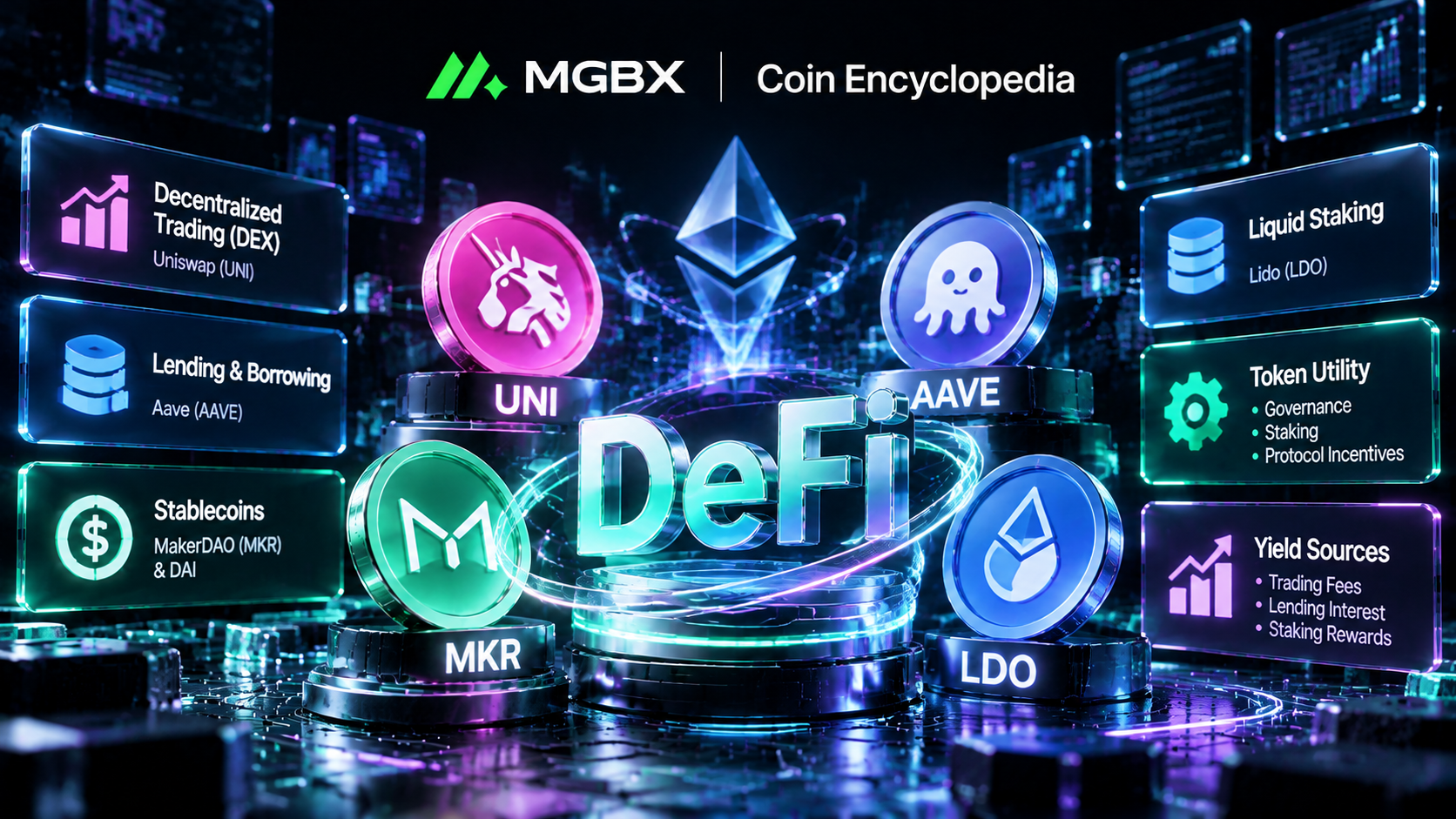
Investing in DeFi starts with distinguishing protocol services, token rights, and yield sources. Uniswap, Aave, MakerDAO, and Lido represent trading, lending, stablecoins, and liquid staking, respectively. Using a protocol does not necessarily require buying its governance token, and protocol growth does not guarantee token price appreciation. Research should consider demand, token supply, fee mechanisms, and exit conditions to determine whether returns come from actual activity or temporary incentives. Understanding these relationships is more useful than simply comparing annualized yields or project rankings.
What Are DeFi Tokens? Understanding Protocols and Tokens
DeFi stands for decentralized finance. It typically refers to financial services, such as trading and lending, delivered through blockchains and smart contracts. Users interact with protocols through wallets, with certain rules enforced by code and records available onchain. However, DeFi does not eliminate all trust dependencies: contract code, oracles, governance powers, and underlying assets can all introduce risk.
“DeFi tokens” is a market term rather than a standardized asset class. UNI, AAVE, and LDO primarily serve governance roles; DAI is a stablecoin; stETH represents a staking position. Their uses and price drivers differ. Being part of DeFi does not automatically confer fee distributions, collateral eligibility, or staking rewards. Check each project’s rules.
Four Key Applications: How Funds Flow Through DeFi
Decentralized exchanges facilitate asset swaps. On Uniswap, users trade against liquidity pools, while liquidity providers earn fees under the pool’s rules. DeFi lending connects suppliers with borrowers. On Aave, suppliers provide assets, while ordinary borrowers access liquidity through overcollateralization and pay interest.
Stablecoins and liquid staking are two other major sectors. MakerDAO, known for DAI’s collateral and stability mechanisms, has transitioned to Sky. Lido tokenizes ETH staking positions so users can transfer them or use them in compatible applications. These services can be combined, but each additional protocol may introduce contract, liquidity, or liquidation risks.
For more detail, read “Uniswap (UNI): King of DEXs”, “Aave (AAVE): A DeFi Lending Leader”, “Maker (MKR) and the DAI Ecosystem”, and “Lido (LDO): A Liquid Staking Leader” to explore their mechanisms and token roles.
What Should You Look for When Researching DeFi Tokens?
Start with usage demand, then examine how protocol activity connects to the token’s value. Trading volume, borrowing demand, active users, and total value locked (TVL) offer useful context, but none independently establishes investment value. Rising TVL may reflect higher asset prices or temporary incentives rather than sustained demand.
Next, distinguish sources of returns. Token appreciation reflects market price changes; supply interest comes from lending; market-making fees come from trading; incentive rewards may depend on token issuance. High annualized yields do not necessarily mean high net returns. Account for fees, token depreciation, impermanent loss, and exit costs.
Finally, review token unlocks, governance concentration, audit history, and past incidents. A long operating history and high TVL provide research context, not proof of safety. Understanding token approvals, network fees, and withdrawal procedures can help reduce operational mistakes. This article is for educational purposes only and does not constitute investment advice.
FAQ
How do DeFi tokens differ from BTC and ETH?
BTC and ETH are blockchain-native assets, while DeFi tokens typically relate to specific applications. ETH also pays Ethereum network fees, so their functions can overlap.Does buying a governance token entitle you to protocol revenue?
Not necessarily. Governance rights, fee distributions, and staking rewards are separate mechanisms that require individual verification.How can you assess whether high yields are sustainable?
Identify whether returns come from borrowing interest, trading fees, or token subsidies. Then examine demand, costs, and exit conditions rather than relying solely on advertised annualized yields.
Mastering the basics is the first step. Follow MGBX Academy to access more cryptocurrency educational resources and market opportunities.
The process for trading on MGBX:
Register a trading account and complete the necessary identity verification;
Deposit funds and select a trade type;
On the cryptocurrency trading page, enter the amount or quantity of the cryptocurrency you wish to purchase;
Confirm the order to complete the trade, and check that your assets have increased accordingly.