Starknet (STRK): An Emerging ZK Scaling Solution
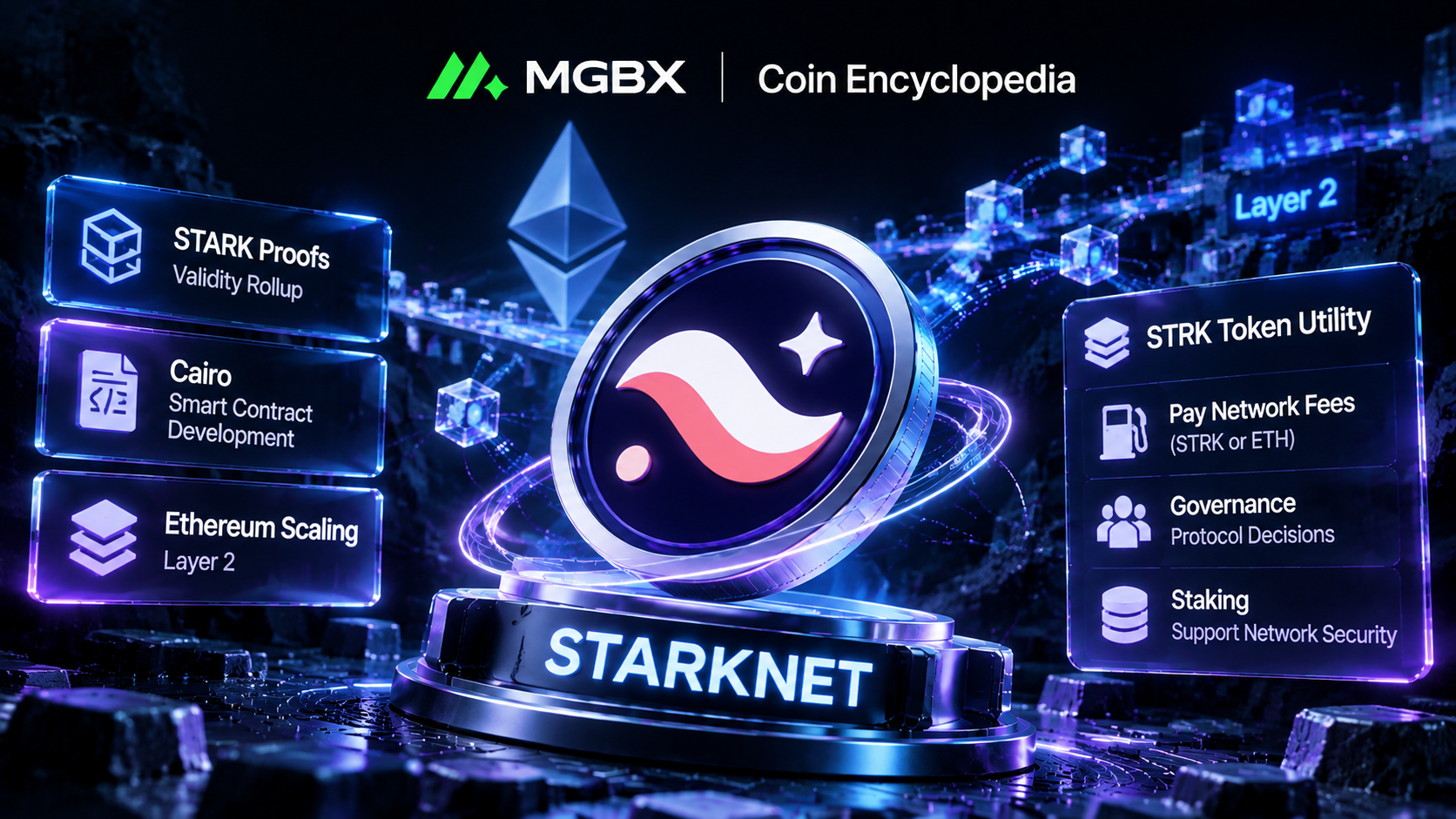
Starknet is an Ethereum Layer 2 network that uses validity proofs to verify on-chain state transitions and Cairo to support smart contract development. STRK is its native token, used for network fees, governance, and staking. Understanding Starknet’s technical strengths requires examining its proof system, development environment, decentralization roadmap, and tokenomics.
What Is Starknet? How STARK Proofs Scale Ethereum
Starknet is a validity Rollup built on Ethereum. Transactions are executed on Layer 2, and cryptographic proofs are used to verify the resulting state transitions. The relevant data and proofs are then submitted to Ethereum. This architecture aims to increase transaction processing capacity while relying on Ethereum for important verification and settlement functions.
STARK proofs are a core part of Starknet’s technology. According to StarkWare’s official STARK overview, STARK proofs do not require a traditional trusted setup ceremony and rely on cryptographic assumptions based on hash functions. These properties help simplify the trust assumptions of the proof system, but they do not mean that every component of the blockchain is automatically secure.
Unlike networks designed for direct EVM compatibility, Starknet primarily uses Cairo for smart contract development. Cairo was designed for verifiable computation, allowing developers to write smart contracts and other programs that can be verified through cryptographic proofs. The official Cairo programming guide covers its syntax, development tools, and programming techniques. Teams familiar with Solidity should account for differences in language design, development tools, and the potential need to refactor existing contracts when migrating to Starknet.
What Is STRK Used For? Gas Fees, Governance, and Staking
STRK is Starknet’s native token. It can be used to pay network transaction fees, participate in governance, and support staking. According to the official Starknet FAQ, the network supports transaction fee payments in either ETH or STRK. Token holders can also participate in governance decisions that influence the network’s development.
Starknet has introduced a phased staking mechanism. According to the official Starknet staking documentation, holders can become validators or delegate their tokens to validators that support delegation, participating in rewards according to protocol rules. However, staking has been introduced in stages, and the transition toward a more decentralized validator network does not mean that every decentralization milestone has already been completed.
Staking also involves risks, including token price volatility, validator performance, commissions, unbonding periods, and changes to protocol parameters. Before participating, users should review the current staking rules and understand the applicable conditions rather than treating staking rewards as guaranteed returns.
Starknet’s Ecosystem Outlook and Key Risks
Starknet’s technology is suited to applications that require verifiable computation and on-chain interactions, including DeFi, gaming, and other smart contract use cases. Cairo and STARK proofs distinguish its technical approach, but continued ecosystem growth also depends on developer tooling, application demand, user experience, and network reliability.
STRK’s market performance depends on more than technological progress. Token supply, unlock schedules, staking participation, governance decisions, and broader crypto market conditions can all affect its price. Users should also consider risks associated with smart contracts, cross-chain bridges, proof systems, and network operations. When evaluating Starknet, it is important to assess technical progress, ecosystem adoption, and token value separately.
Frequently Asked Questions
What is Starknet?
Starknet is an Ethereum Layer 2 network that uses validity proofs to scale transaction processing.What is Cairo used for?
Cairo is a programming language used to build verifiable computation programs and Starknet smart contracts.Can STRK be used to pay gas fees?
Yes. Starknet supports paying network transaction fees in either STRK or ETH.Is staking STRK risk-free?
No. Rewards and actual returns depend on token prices, validator performance, protocol rules, and unbonding conditions.
Mastering the basics is the first step. Follow MGBX Academy to access more cryptocurrency educational resources and market opportunities.
The process for trading on MGBX:
Register a trading account and complete the necessary identity verification;
Deposit funds and select a trade type;
On the cryptocurrency trading page, enter the amount or quantity of the cryptocurrency you wish to purchase;
Confirm the order to complete the trade, and check that your assets have increased accordingly.
Further Readings:
Layer 2 Assets Investment Guide