What Is VDOR? Vanguard Digital Oil Reserve Tokenomics and Market Risks
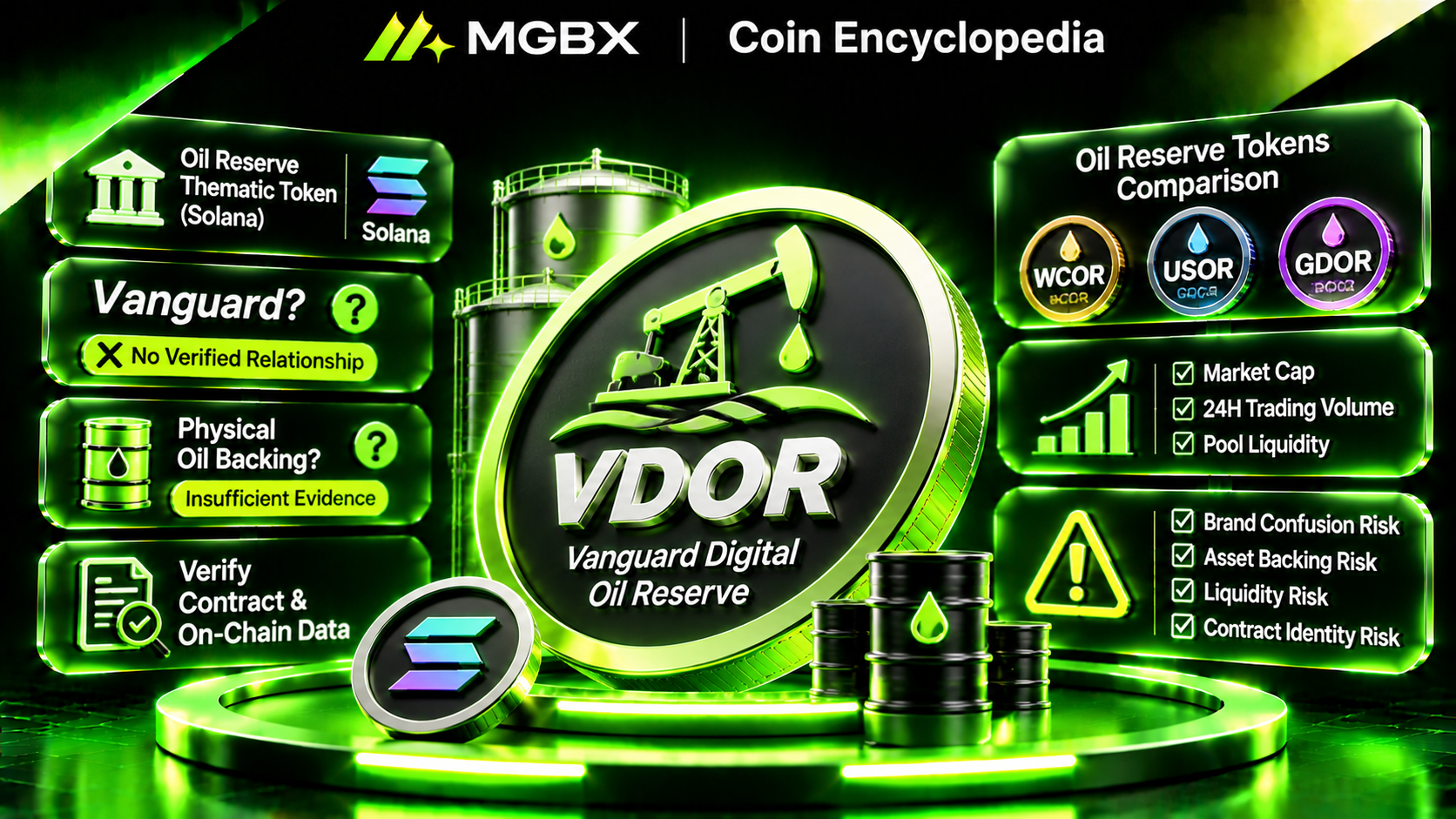
VDOR is a Solana-based thematic token built around the concept of a digital oil reserve. Although its name uses the term Vanguard Digital Oil Reserve, there is insufficient public evidence establishing an official relationship with Vanguard Group or verified backing by physical oil reserves. As similar energy-themed tokens such as WCOR, USOR, and GDOR emerge, a niche market for oil reserve narratives is developing. Researching VDOR requires examining contract identity, on-chain supply, trading pool depth, and actual asset rights rather than assuming that its oil reserve-themed name represents underlying asset value.
What Is VDOR and Why Has It Attracted Attention in the Crypto Market?
VDOR generally refers to Vanguard Digital Oil Reserve, a Solana-based token built around the concept of oil reserves. Its branding combines the name of a traditional financial institution with digital reserves and energy market themes, seeking to attract traders interested in real-world asset narratives.
Unlike traditional oil investment products, VDOR is not a verified oil fund, crude oil futures contract, or government strategic petroleum reserve certificate. Its price is primarily determined through on-chain trading and is influenced by token supply and demand, liquidity, and community narratives.
The potential for brand confusion deserves attention. Vanguard is a globally recognized asset management company, while the term digital oil reserve may lead users to associate the token with traditional financial products. Without official partnership announcements, legal documentation, and asset custody evidence, such brand associations cannot establish financial credibility.
From a market perspective, VDOR's visibility alongside other oil-themed tokens reflects growing interest in energy, geopolitics, and real-world asset narratives within the crypto market. However, thematic popularity and actual asset value remain fundamentally different.
How Does VDOR Compare with WCOR and USOR? Analyzing On-Chain Market Data
VDOR is not the only oil reserve-themed token on Solana. WCOR and USOR also use energy reserve narratives, while GDOR has entered the same niche market.
In terms of positioning, VDOR uses the Vanguard Digital Oil Reserve branding, WCOR focuses on the World Collective Oil Reserve concept, and USOR centers on U.S. oil reserves. GDOR emphasizes a global digital oil reserve narrative.
These projects share similar marketing themes, but that does not mean they have the same underlying assets, issuing teams, or legal rights.
According to market monitoring data from third-party on-chain platforms DexBrief and DexTrading between November 19 and November 22, 2026, selected trading pools showed the following figures:
Asset | Reference Market Cap | 24-Hour Trading Volume | Main Trading Pool Liquidity |
VDOR | Approximately $36,500 | Approximately $9 | Approximately $16,400 |
WCOR | Approximately $62,000 | Approximately $13 | Approximately $23,000 |
USOR | Approximately $284,400 | Approximately $608 | Approximately $45,000 |
These figures are market snapshots taken at different times. They are not synchronized real-time trading quotes and do not represent liquidity across every trading venue.
The data highlights an important distinction: market capitalization is not the same as immediately available trading liquidity. A token may have a market capitalization of tens of thousands of dollars while recording only single-digit trading volume over 24 hours. Under such conditions, even relatively small buy or sell orders may significantly affect its price.
Contract identity also requires careful verification. Different VDOR market data pages may display different contract addresses and holder records. Therefore, users should not assume that assets sharing the VDOR or VDR ticker represent the same token. Verify the full contract address before comparing supply, holder distribution, and trading pool conditions.
VDOR Price Drivers, Asset Backing, and Investment Risks
VDOR's short-term price may be influenced by international oil news, geopolitical developments, energy supply expectations, and social media exposure. However, these factors do not establish a mandatory price peg.
A genuinely oil-backed digital asset should provide clear documentation of crude oil ownership, custody arrangements, independent audits, reserve disclosures, and holder redemption rights. Only when these conditions can be verified is there a reasonable basis for discussing an economic relationship between the token and physical oil.
The U.S. Department of Energy's official Strategic Petroleum Reserve information explains that the U.S. Strategic Petroleum Reserve consists of physical crude oil owned and managed by the federal government, primarily to address disruptions in oil supplies. Its legal and asset structure is fundamentally different from that of a community-issued oil-themed token.
From a market perspective, VDOR faces four major risks:
Brand confusion: Using the name of a financial institution does not establish institutional backing.
Asset backing risk: An oil reserve narrative cannot replace verifiable custody documentation.
Liquidity risk: Low trading volume and limited pool depth may increase slippage and exit costs.
Contract identity risk: Tokens with similar names may exist across different networks and trading pools.
Compared with established assets such as BTC and ETH, VDOR currently depends more heavily on market attention and thematic trading. Even if international oil prices rise, VDOR is not guaranteed to appreciate. Traders should focus on verifying token demand, liquidity, and asset rights rather than chasing its oil reserve-themed name.
Mastering the basics is the first step. Follow MGBX Academy to access more cryptocurrency educational resources and market opportunities.
The process for trading on MGBX:
Register a trading account and complete the necessary identity verification;
Deposit funds and select a trade type;
On the cryptocurrency trading page, enter the amount or quantity of the cryptocurrency you wish to purchase;
Confirm the order to complete the trade, and check that your assets have increased accordingly.