Insurance Fund and Auto-Deleveraging (ADL) Mechanism
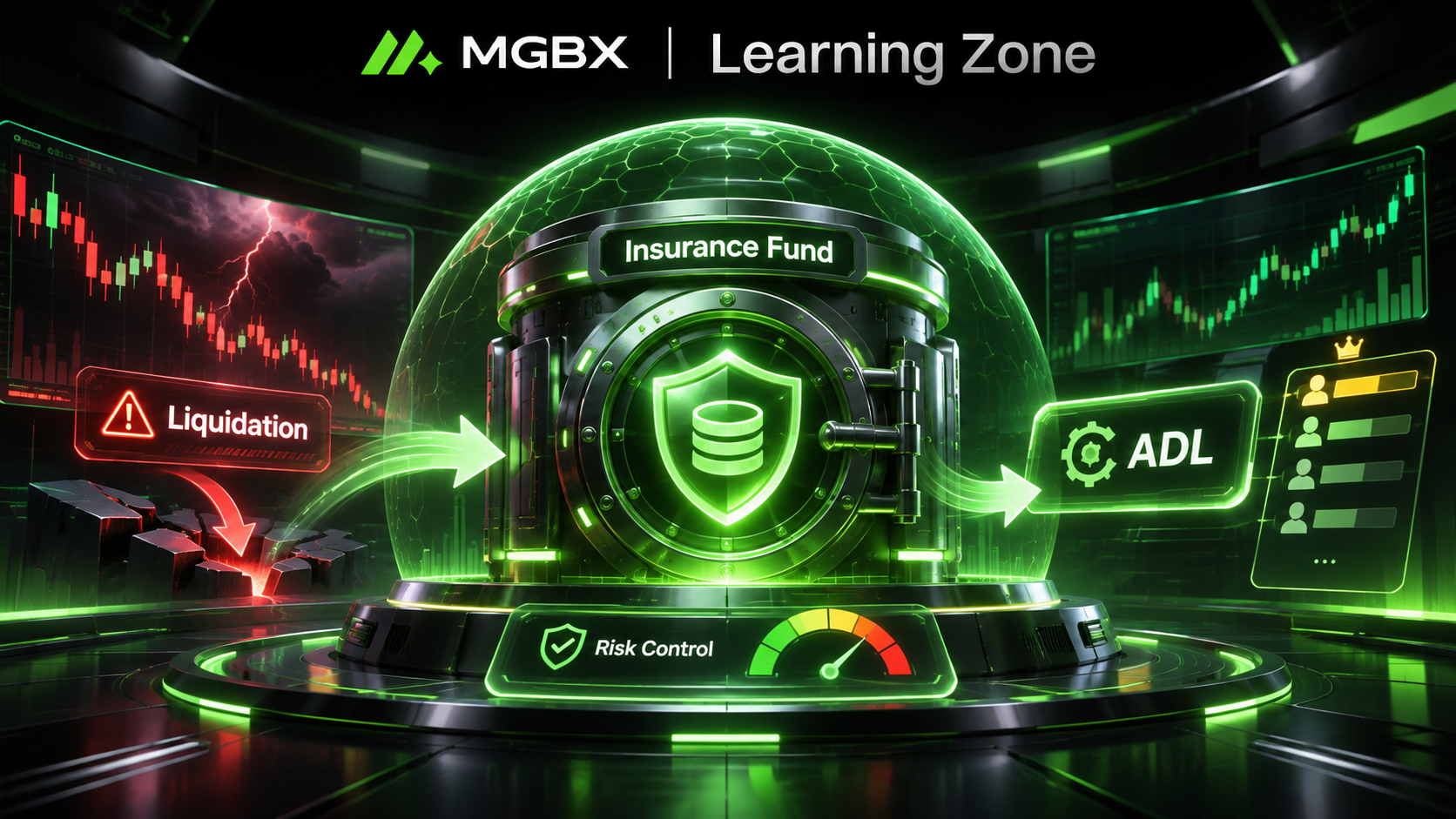
Insurance funds and auto-deleveraging mechanisms are important risk management tools in the crypto derivatives market. When extreme market volatility prevents liquidated positions from being closed at expected prices, insurance funds may cover eligible liquidation shortfalls according to platform rules. If the insurance fund is insufficient to cover the losses, the auto-deleveraging (ADL) mechanism may be triggered. Understanding the differences between insurance funds, bankruptcy, ADL, and clawback mechanisms helps traders better understand how platforms manage risk during extreme market conditions.
What Is an Insurance Fund? Managing Bankruptcy Risk in Futures Trading
An insurance fund is a reserve mechanism used by trading platforms to manage extreme liquidation risks. Its primary purpose is to cover certain losses that may arise during forced liquidation, rather than compensate users for ordinary trading losses.
In futures trading, when a position's margin falls below the maintenance margin requirement, the platform may initiate forced liquidation. If market liquidity is insufficient, liquidation orders may not be filled at the expected price. When the actual liquidation result is worse than the bankruptcy price, the position may incur a loss exceeding its available margin. This is generally referred to as bankruptcy or a liquidation deficit.
The insurance fund is designed to cover eligible liquidation shortfalls according to platform rules, helping reduce the impact of bankruptcy losses on the platform's overall risk management system.
Funding sources and management practices vary across platforms. MGBX's public Futures Service Agreement states that the platform maintains a risk reserve fund to support normal futures trading operations and address unexpected risks. It also specifies that eligible remaining funds from liquidations may be added to this reserve.
Therefore, an insurance fund is not the same as traditional commercial insurance, nor does it provide unconditional protection for users' trading capital.
How Does Auto-Deleveraging (ADL) Work? Why Profitable Positions May Also Be Reduced
Auto-Deleveraging (ADL) is a risk management mechanism used by trading platforms to address uncovered liquidation risks under extreme market conditions.
According to the MGBX Futures FAQ, ADL may be triggered when the following conditions occur together: a position has entered forced liquidation, insufficient market liquidity prevents the liquidation order from being fully executed at the expected price, and the insurance fund cannot cover the resulting losses.
The basic principle of ADL is to reduce eligible counterparty positions to resolve risk exposure that cannot be handled through normal liquidation.
The system identifies positions for auto-deleveraging based on leverage and profit rankings. Traders with higher leverage and greater unrealized profits may receive higher ADL rankings, meaning their profitable positions may also be automatically reduced during extreme market conditions.
Before ADL is executed, the system may cancel unfilled orders according to the applicable rules to release available margin. If the risk remains unresolved, eligible positions may then be gradually reduced based on their ADL rankings.
This means that correctly predicting market direction does not guarantee that a position can remain open until the trader chooses to close it. If ADL is triggered, the final settlement result depends on the platform's execution rules and the actual execution price.
Bankruptcy vs ADL vs Socialized Loss
These concepts are all related to futures liquidation, but they address different aspects of risk management.
Bankruptcy occurs when the actual loss after forced liquidation exceeds the margin available to cover the position, creating a liquidation shortfall. Insurance funds may be used to cover eligible shortfalls according to platform rules.
ADL is used when the insurance fund is insufficient and normal liquidation cannot fully resolve the risk. It reduces eligible counterparty positions automatically. Unlike ordinary forced liquidation, it does not mean that profitable traders have voluntarily assumed additional trading obligations.
Clawback and Socialized Loss refer to mechanisms for determining how uncovered liquidation losses are handled. Rules vary across platforms. The MGBX public FAQ explains that in extreme circumstances, if liquidation losses exceed the insurance fund, the platform may handle the remaining shortfall through its clawback mechanism, which may involve funds from profitable users' accounts.
Therefore, traders should not assume that insurance funds can cover every loss under extreme market conditions or that ADL is simply another form of profit settlement. Understanding the platform's risk reserve, ADL ranking, and clawback rules before opening a position is an important part of futures risk management.
FAQ
What is bankruptcy in futures trading?
Bankruptcy occurs when the actual loss after forced liquidation exceeds the margin available in a position, creating a deficit that cannot be covered by the position's own funds.Does an insurance fund compensate users for ordinary trading losses?
No. Insurance funds are primarily designed to cover eligible liquidation shortfalls under platform rules, not ordinary trading losses.Does ADL take away my trading profits?
ADL automatically reduces or closes eligible counterparty positions to manage liquidation risk. The actual PnL depends on the execution price and position details.Why can profitable positions also be reduced through ADL?
Because the system may determine the auto-deleveraging priority based on profit and leverage rankings. Positions with higher profits and leverage may be prioritized.How can I reduce my ADL risk?
Manage leverage and position size carefully, monitor the platform's ADL indicators, and avoid excessive risk exposure during extreme market conditions.
Mastering the basics is the first step. Follow MGBX Academy to access more cryptocurrency educational resources and market opportunities.
The process for trading on MGBX:
Register a trading account and complete the necessary identity verification;
Deposit funds and select a trade type;
On the cryptocurrency trading page, enter the amount or quantity of the cryptocurrency you wish to purchase;
Confirm the order to complete the trade, and check that your assets have increased accordingly.
Further Readings:
Advanced Futures Strategies: Hedging, Risk Management, and Calendar Spread Trading
Futures Trading Risk Management Framework