Futures Trading Psychology: How to Avoid Emotional Trading
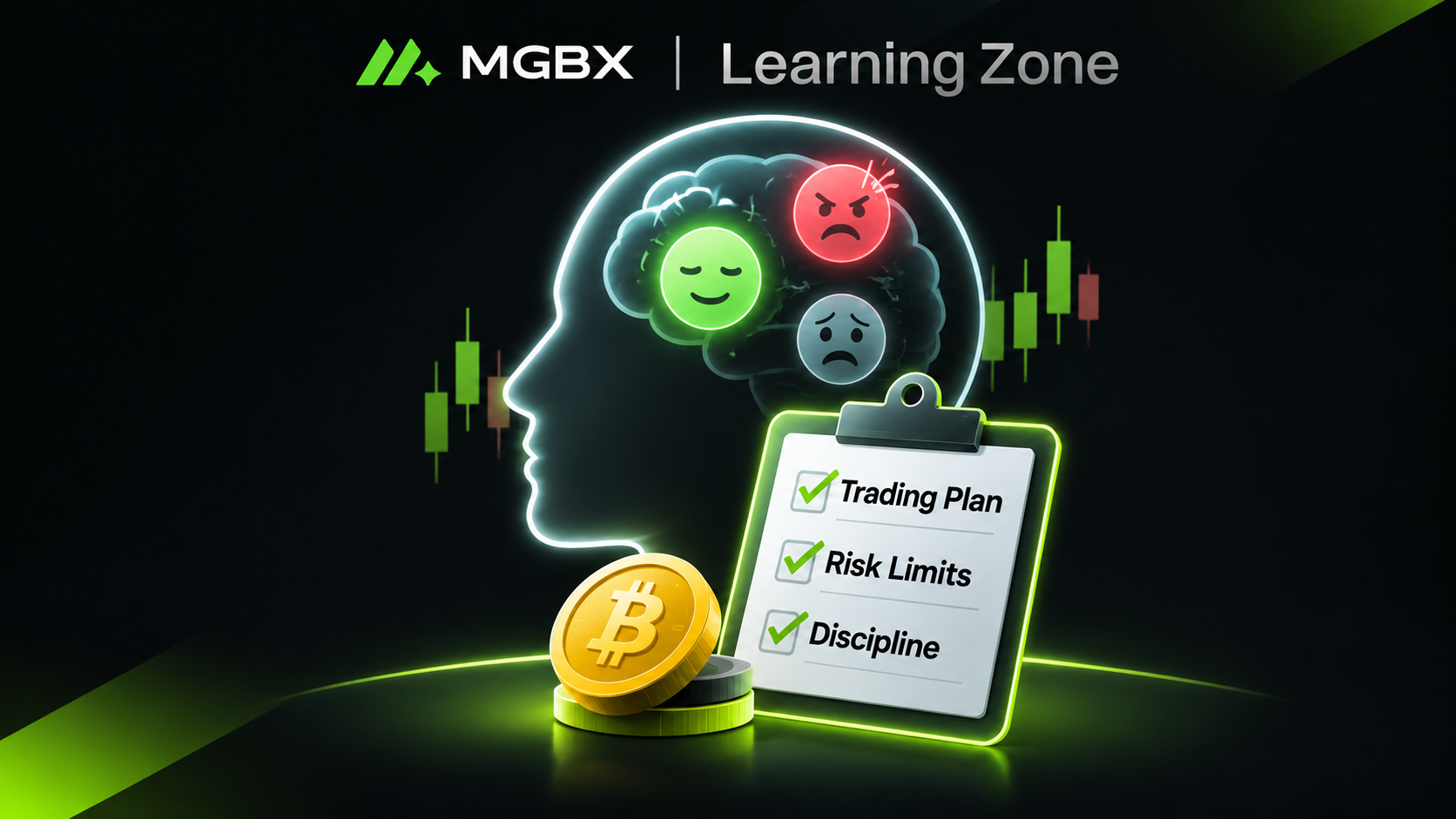
Futures trading psychology examines the relationship between emotions, cognitive biases, and trading decisions. Rapid market movements can trigger FOMO, fear, greed, and revenge trading, causing traders to deviate from their original strategies. Even with sound technical analysis, a lack of emotional control and execution discipline can lead to greater losses through chasing price movements, holding losing positions, or overtrading. Establishing a clear trading plan, cooling-off rules, and regular trade reviews is essential for improving trading behavior.
Futures Trading Psychology: Why Do Emotions Affect Trading Decisions?
Futures trading tests not only a trader's market analysis skills but also their ability to manage emotions when facing uncertainty.
Crypto markets operate around the clock, with prices changing rapidly. Market predictions and news shared on social media can also continuously influence trading decisions. In this environment, fear and greed can easily disrupt an established trading plan.
Common behavioral biases include loss aversion, overconfidence, and herd behavior.
Loss Aversion refers to the tendency to feel losses more strongly than gains of the same magnitude. This may cause traders to avoid closing losing positions, hoping the market will reverse and allow them to recover their losses.
Overconfidence may develop after a series of profitable trades, causing traders to overestimate their judgment and increase leverage or position sizes.
Herd Behavior occurs when traders abandon their original analysis and follow market sentiment after seeing large numbers of participants taking bullish or bearish positions.
The CFA Institute identifies loss aversion, overconfidence, and self-control as important behavioral biases in behavioral finance. Recognizing these biases is an important step toward improving financial decision-making.
Common Emotional Traps: FOMO, Holding Losing Positions, and Revenge Trading
FOMO (Fear of Missing Out): This is a common psychological trap in futures trading. When a cryptocurrency rises sharply within a short period, traders may fear missing out on the rally and open long positions at elevated prices without a well-defined trading plan.
Fear: Fear may cause traders to close positions too early during normal market pullbacks or repeatedly change their trading plans before the original stop-loss conditions are met.
Greed: Traders may continually raise their profit targets after a position becomes profitable, delaying take-profit execution and potentially giving back a significant portion of their unrealized gains.
Revenge Trading: After consecutive losses, traders may rush to recover their money by increasing position sizes or using higher leverage. These decisions are often driven by frustration and emotion rather than new market signals.
The common problem behind these behaviors is that traders begin making decisions based on short-term emotions instead of following predefined trading rules.
How to Build Trading Discipline and Emotional Control
Avoiding emotional trading does not mean completely eliminating fear or greed. Instead, it involves developing a decision-making process that is less vulnerable to short-term emotional reactions.
Create a written trading plan. Before opening a position, define the trade direction, entry conditions, stop-loss level, take-profit target, and maximum risk budget. This helps prevent impulsive changes when market conditions shift.
Establish cooling-off rules. For example, temporarily stop trading after consecutive losses and review your trading records and strategy instead of immediately increasing leverage to recover losses. The duration and conditions for taking a break can be determined in advance based on individual circumstances rather than following a fixed 24-hour rule.
Reduce unnecessary screen time and overtrading. Use available price alerts, conditional orders, and take-profit and stop-loss tools to manage positions, while continuing to monitor order status and actual execution.
Maintain a trading journal. In addition to recording profits and losses, document your emotional state when entering a trade, whether you followed your plan, and why you changed your strategy. Regular reviews can help identify recurring behaviors such as FOMO, holding losing positions, and overtrading.
Effective trading discipline does not require getting every market prediction right. It means following predefined risk management rules even when a trade does not go as expected.
FAQ
What is FOMO in futures trading?
FOMO is the fear of missing out on market opportunities. It may cause traders to open positions impulsively when prices rise or fall rapidly.Why does revenge trading often happen after losses?
Consecutive losses can trigger frustration and an urgent desire to recover money, causing traders to abandon their original position-sizing and risk management rules.How can traders avoid emotional trading?
Developing a trading plan in advance, setting maximum loss limits, establishing cooling-off rules, and maintaining a trading journal can help improve decision-making.Does frequent trading always increase profit opportunities?
No. Frequent trading can increase fees, slippage, and decision-making errors, potentially reducing overall trading efficiency.Is trading discipline more important than technical analysis?
They serve different purposes. Technical analysis helps traders develop market views, while trading discipline helps them execute plans and manage risk. Neither can fully replace the other.
Further Readings:
Insurance Fund and Auto-Deleveraging (ADL) Mechanism
Advanced Futures Strategies: Hedging, Risk Management, and Calendar Spread Trading
Futures Trading Risk Management Framework
Mastering the basics is the first step. Follow MGBX Academy to access more cryptocurrency educational resources and market opportunities.
The process for trading on MGBX:
Register a trading account and complete the necessary identity verification;
Deposit funds and select a trade type;
On the cryptocurrency trading page, enter the amount or quantity of the cryptocurrency you wish to purchase;
Confirm the order to complete the trade, and check that your assets have increased accordingly.