How Spot Trading Works: A Detailed Guide
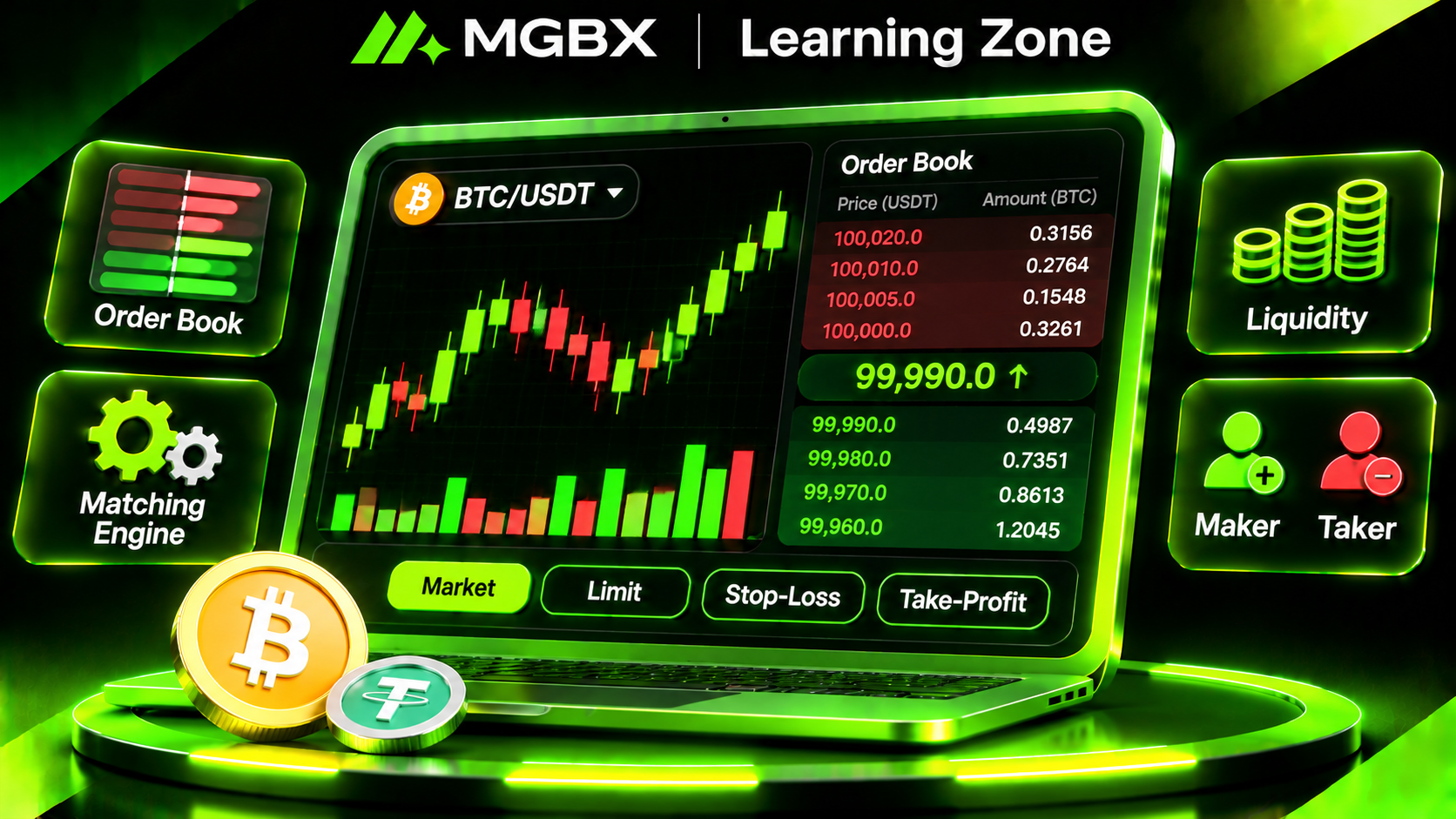
Spot trading may look like a simple process of buying and selling assets, but every spot order involves an order book, a matching engine, and market liquidity. The order book records buy and sell orders that have not yet been fully filled, while the matching engine pairs eligible orders according to the platform's rules. The amount available at each price level also affects the final execution price. Understanding these mechanics makes it easier to read market depth, bid-ask spreads, Maker/Taker roles, partial fills, and slippage.
How Does the Spot Trading Mechanism Work?
When a user submits a buy or sell order, it enters the exchange's matching system. The system first reads the order's price, quantity, and other conditions, then searches the order book for eligible counterparties.
If the buy and sell prices are compatible, the matching engine executes the trade according to the platform's rules and updates both the order status and account balances. If no suitable counterparty is available, the order may remain open in the order book.
If there is not enough liquidity at one price level, an order may be filled in several parts across different prices. As a result, the actual execution price is determined not simply by the latest price shown on screen, but by order book depth, available liquidity, and the order type being used.
What Do the Red and Green Numbers in an Order Book Mean?
An order book can be viewed as a real-time list of market quotes.
Buyers place orders showing how much they are willing to buy at different prices, while sellers list how much they are willing to sell. The highest available buy price is generally called the best bid, while the lowest available sell price is the best ask.
The difference between the two is known as the bid-ask spread.
For example, if the best bid is 99.9 USDT and the best ask is 100 USDT, the current spread is 0.1 USDT.
If there are large numbers of open orders across multiple nearby price levels, the market is generally considered to have greater depth. In this case, a small or medium-sized order may have limited impact on the market price.
By contrast, if the order book is thin and only a small quantity is available at each price level, a larger buy or sell order may move through several levels, creating a more noticeable price impact.
It is important to note that an order book only reflects currently displayed market orders. It cannot, on its own, predict whether the price will rise or fall.
Why Can a Matching Engine Produce Multiple Execution Prices?
The matching engine is responsible for pairing buy and sell orders that meet each other's conditions.
Many markets use basic rules such as price priority and time priority. For example, when multiple orders are placed at the same price, the order that entered the book earlier is generally given higher priority. However, exact matching rules may vary by platform and order type.
Suppose a user wants to buy 10 units of an asset at market price, but only 3 units are available at the best ask. The system may first fill those 3 units, then continue matching the remaining amount against the second and third ask levels.
As a result, a single order may be executed at several different prices, with the platform displaying an average execution price. This is also one reason larger market orders are more likely to experience slippage.
How Are Maker, Taker, and Liquidity Related?
Maker: When an order enters the order book and waits for another trader to match with it, it generally adds liquidity to the market.
Taker: When an order is submitted and immediately matches with an existing order in the book, it removes available liquidity.
Market orders are generally Taker orders, but limit orders are not always Maker orders. For example, if the current best ask is 100 USDT and a user submits a limit buy order with a maximum price of 101 USDT, the order may immediately execute against the 100 USDT sell order. In that case, the limit order would still act as a Taker.
Once you understand order books, matching engines, and liquidity, concepts such as market orders, limit orders, slippage, and partial fills become much easier to understand.
FAQ
What is an order book?
An order book is a collection of buy and sell orders that have not yet been fully filled, showing available quantities at different price levels.What is a matching engine?
A matching engine is the core system an exchange uses to pair buy and sell orders according to predefined rules.Why can one order have multiple execution prices?
If there is not enough quantity available at one price level, the system may continue matching the order at additional price levels.Is every limit order a Maker order?
No. If a limit order immediately matches with an existing order, it may act as a Taker instead.Does a deep order book mean an asset has low risk?
No. Market depth mainly reflects the liquidity of a specific trading pair at a given time. It does not indicate project quality or future price performance.
Mastering the basics is the first step. Follow MGBX Academy to access more cryptocurrency educational resources and market opportunities.
The process for trading on MGBX:
Register a trading account and complete the necessary identity verification;
Deposit funds and select a trade type;
On the cryptocurrency trading page, enter the amount or quantity of the cryptocurrency you wish to purchase;
Confirm the order to complete the trade, and check that your assets have increased accordingly.
Further Readings:
Complete Guide to Spot Trading
What Is Spot Trading? The Simplest Way to Buy Crypto
Complete Guide to Market Orders: Speed, Benefits, and Risks
Complete Guide to Limit Orders: Trading With Greater Price Control
Stop-Loss and Take-Profit Orders: Essential Tools for Risk Management