Uniswap (UNI): King of DEXs
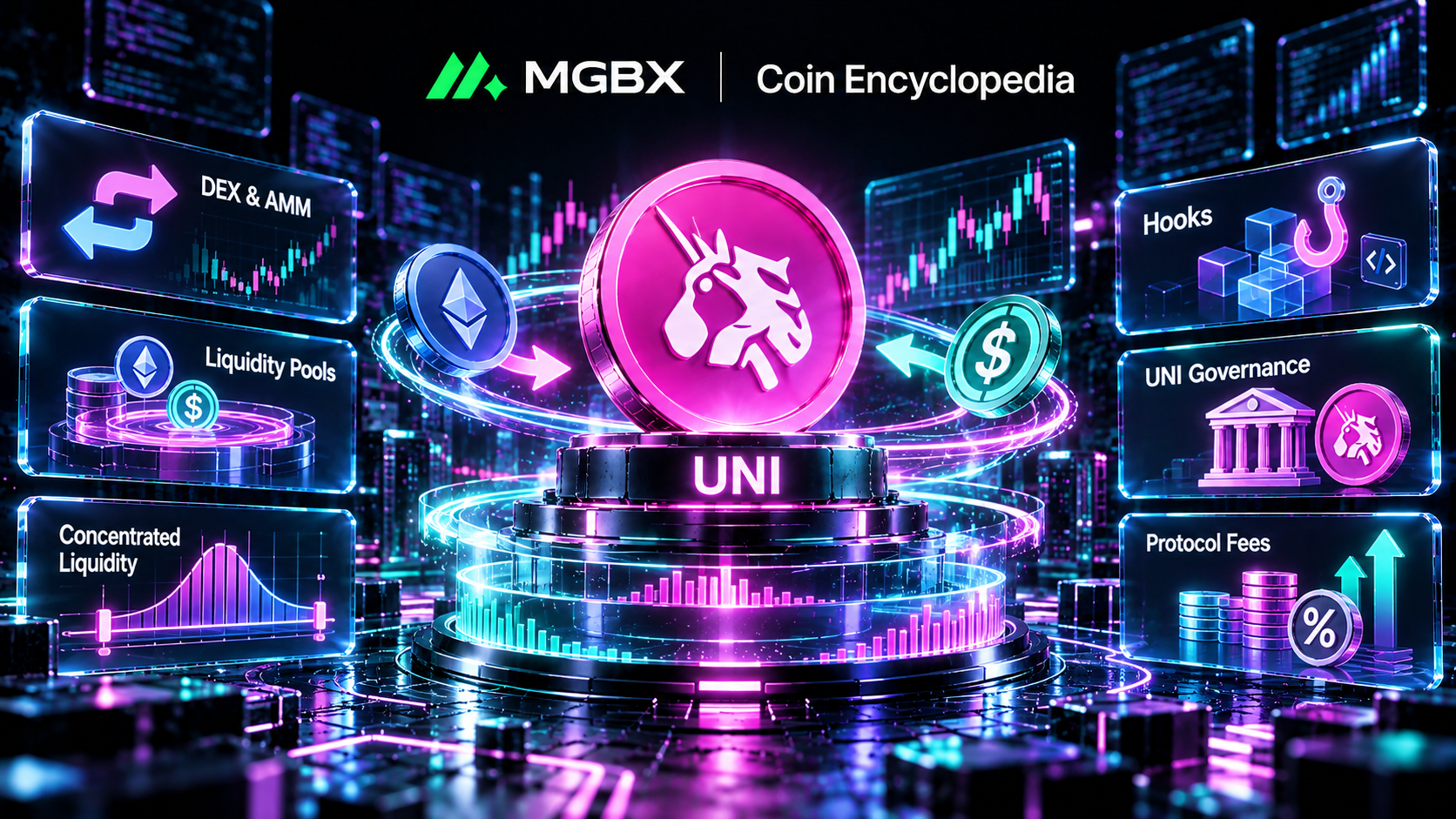
Uniswap enables onchain asset swaps through AMMs and liquidity pools, making it a useful introduction to decentralized exchanges. Its technology has evolved from the constant product model to concentrated liquidity and Hooks, offering greater flexibility and more varied strategies. UNI primarily serves a governance role, while protocol fees and token burns are also relevant to its analysis. Trading growth, liquidity provider returns, and UNI prices are connected in different ways—not interchangeable measures. Understanding these distinctions helps separate protocol usage from token investment.
What Is Uniswap, and How Do AMMs Enable Swaps?
Uniswap is a decentralized trading protocol. DEX stands for decentralized exchange. Users can swap assets through smart contracts using their wallets without first depositing funds into a centralized exchange account. Its core AMM mechanism executes trades through liquidity pools, reducing reliance on order book matching.
Uniswap v2’s constant product model can be simplified as x*y=k, where x and y represent the reserves of two assets in a pool. Trades change the reserve ratio and therefore the quoted price. Other things being equal, larger trades relative to pool size generally have greater price impact. Confirmation times and network fees depend on the underlying blockchain’s conditions; transactions are not universally instant or inexpensive.
What Changed with Concentrated Liquidity and Hooks?
Uniswap v3 introduced concentrated liquidity, allowing liquidity providers (LPs) to allocate funds within specific price ranges. This improves capital efficiency within those ranges. However, when the market price moves outside a position’s range, it generally stops earning trading fees and may consist entirely of one asset. Greater capital efficiency therefore comes with additional management demands.
Uniswap v4 introduced Hooks, allowing developers to add custom logic at specific stages of liquidity pool operations, such as dynamic fees. Features depend on the implementation, so not every v4 pool follows identical rules. Users should understand each pool’s assets, fees, and additional logic rather than choosing solely by version.
How Do UNI Governance and Protocol Fees Work?
UNI is Uniswap’s governance token. Holders can vote or delegate voting power under the governance rules. Decisions cover protocol parameters and resource allocation, but holding tokens does not grant unilateral control over the treasury. Swapping on Uniswap generally does not require UNI; network fees are paid using the relevant blockchain’s supported fee asset.
Research into UNI should also consider protocol fees and burn mechanisms. Official documentation describes how fees can enter an onchain collection system and be processed through configured releaser contracts. One mechanism burns UNI in exchange for collected assets. Check current deployments for activation scope and parameters rather than treating the fee switch solely as a future proposal.
Protocol fees, LP trading fees, and UNI investment returns require separate analysis. Burns affect supply but do not automatically distribute dividends or guarantee price appreciation. LPs still face impermanent loss, out-of-range positions, token risks, and network costs. Following the framework in “A Beginner’s Guide to Investing in DeFi Tokens” , assess protocol activity separately from token valuation. This article does not constitute investment advice.
FAQ
Do I need to buy UNI to use Uniswap?
Generally, no. You need the assets you want to trade and the relevant network’s fee asset.Will concentrated liquidity positions be liquidated if they move out of range?
Providing liquidity alone does not trigger lending liquidation when a position moves out of range, but it generally stops earning fees. Separate borrowing arrangements introduce additional risks.Do UNI burns guarantee investment returns?
No. Prices also depend on demand, token supply changes, competition, and broader market conditions.
Mastering the basics is the first step. Follow MGBX Academy to access more cryptocurrency educational resources and market opportunities.
The process for trading on MGBX:
Register a trading account and complete the necessary identity verification;
Deposit funds and select a trade type;
On the cryptocurrency trading page, enter the amount or quantity of the cryptocurrency you wish to purchase;
Confirm the order to complete the trade, and check that your assets have increased accordingly.