Margin Trading vs. Futures Trading: Differences and How to Choose
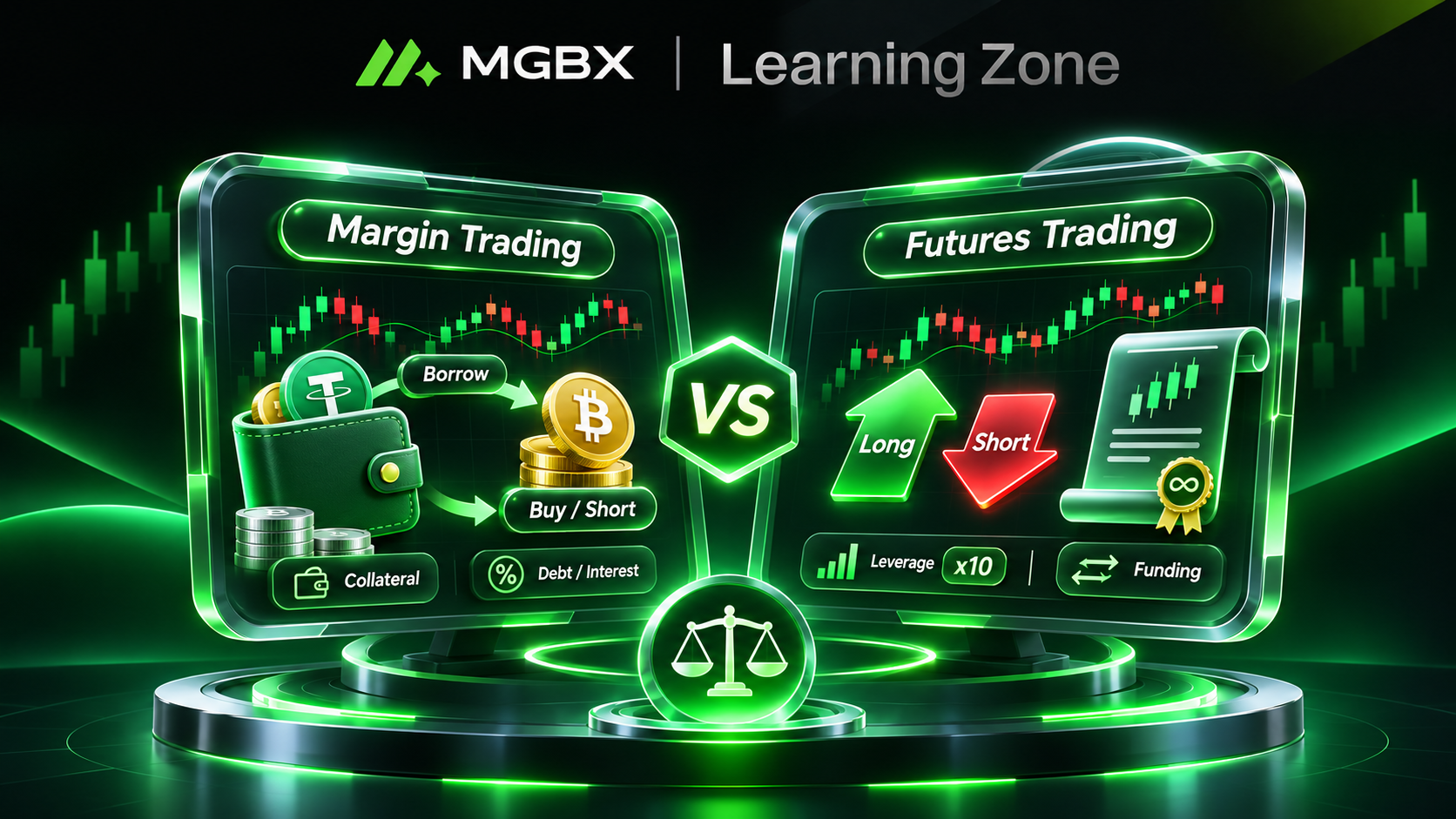
Leverage increases market exposure, and futures trading can also use leverage. On trading platforms, margin trading typically means borrowing assets for spot trades and repaying principal and interest. Futures trading involves derivatives positions, with distinctions between perpetual and dated contracts. Compare trading objectives, costs, liquidity, and risk rules rather than maximum leverage alone. Both involve liquidation risk, and neither is inherently suitable for every beginner.
How Do Margin and Futures Trading Differ?
To avoid confusion, this article compares spot margin trading with digital asset futures.
Spot margin trading expands spot exposure by borrowing the quote asset to buy tokens or borrowing the target token to sell it short. Borrowing creates debt, so exiting a trade also requires checking that repayment is complete.
Futures trading provides long or short exposure to price movements. Holding a position does not mean owning the corresponding quantity of spot assets. The margin currency, settlement currency, and underlying asset may differ. Whether physical delivery applies depends on the product; not all contracts settle the same way.
Costs vs Margin Rules?
Comparison | Spot Margin Trading | Futures Trading |
Main mechanism | Borrow assets for spot trades | Open derivatives positions |
Debt management | Repay borrowing and applicable interest | Usually no corresponding spot borrowing or repayment |
Holding costs | Borrowing interest | Perpetuals may involve funding payments |
Expiration | Depends on borrowing rules | Perpetuals have no fixed expiry; dated contracts do |
Risk assessment | Assets, liabilities, and collateral rules | Equity, maintenance margin, and contract rules |
Borrowing rates are not necessarily fixed, and holding a position does not automatically incur interest under identical terms. Outstanding debt and the applicable interest rules determine the charges. Perpetual funding is generally exchanged between long and short position holders, with the rate’s sign determining payment direction. Settlement intervals are not universally eight hours; check the current product rules.
How Should Objectives, Liquidity, and Experience Guide Your Choice?
If your goal is simply to buy and hold tokens, first consider whether unleveraged spot trading meets your needs. Spot margin involves actual token purchases and sales, but adds debt and liquidation constraints. It cannot be managed on the assumption that you can wait indefinitely.
For directional trading or hedging existing assets, futures may be worth studying. However, understand mark prices, margin modes, funding costs, and settlement methods. Hedging can involve basis risk, quantity mismatches, and execution risk; it does not automatically lock in returns.
Assess liquidity through spreads, order-book depth, and expected slippage for the specific platform, pair, and order size. Higher aggregate futures volume does not prove that a particular contract offers easier execution or lower costs than spot. Maximum leverage also depends on the product, position tier, and regional rules, so it should not be the primary selection criterion. See The Complete Beginner’s Guide to Leverage Trading for the fundamentals.
FAQ
Can I withdraw the corresponding tokens after opening a futures long?
Usually not. Distinguish the contract position from assets available for withdrawal.Do I still need to repay debt after closing a spot margin trade?
Confirm that all debt is settled. Automatic repayment depends on the settings.Does receiving funding mean the trade is profitable?
No. Price losses and other costs may exceed the funding received.Should beginners immediately choose low-leverage futures?
Do not decide on leverage alone. First understand the product’s full cost structure and risk procedures.
Mastering the basics is the first step. Follow MGBX Academy to access more cryptocurrency educational resources and market opportunities.
The process for trading on MGBX:
Register a trading account and complete the necessary identity verification;
Deposit funds and select a trade type;
On the cryptocurrency trading page, enter the amount or quantity of the cryptocurrency you wish to purchase;
Confirm the order to complete the trade, and check that your assets have increased accordingly.
Further Readings:
The Complete Beginner’s Guide to Leverage Trading
Adding Margin and Liquidation Alerts: Managing Extreme Market Conditions
Real-Life Leverage Liquidation Cases: Lessons from 100,000 to Zero
Leverage Trading Strategies: When to Add to or Reduce Positions
Long-Term Strategies with Low Leverage: Is Consistent Profit Possible?