What Is a Funding Rate? How Perpetual Futures Stay Anchored to Spot Prices
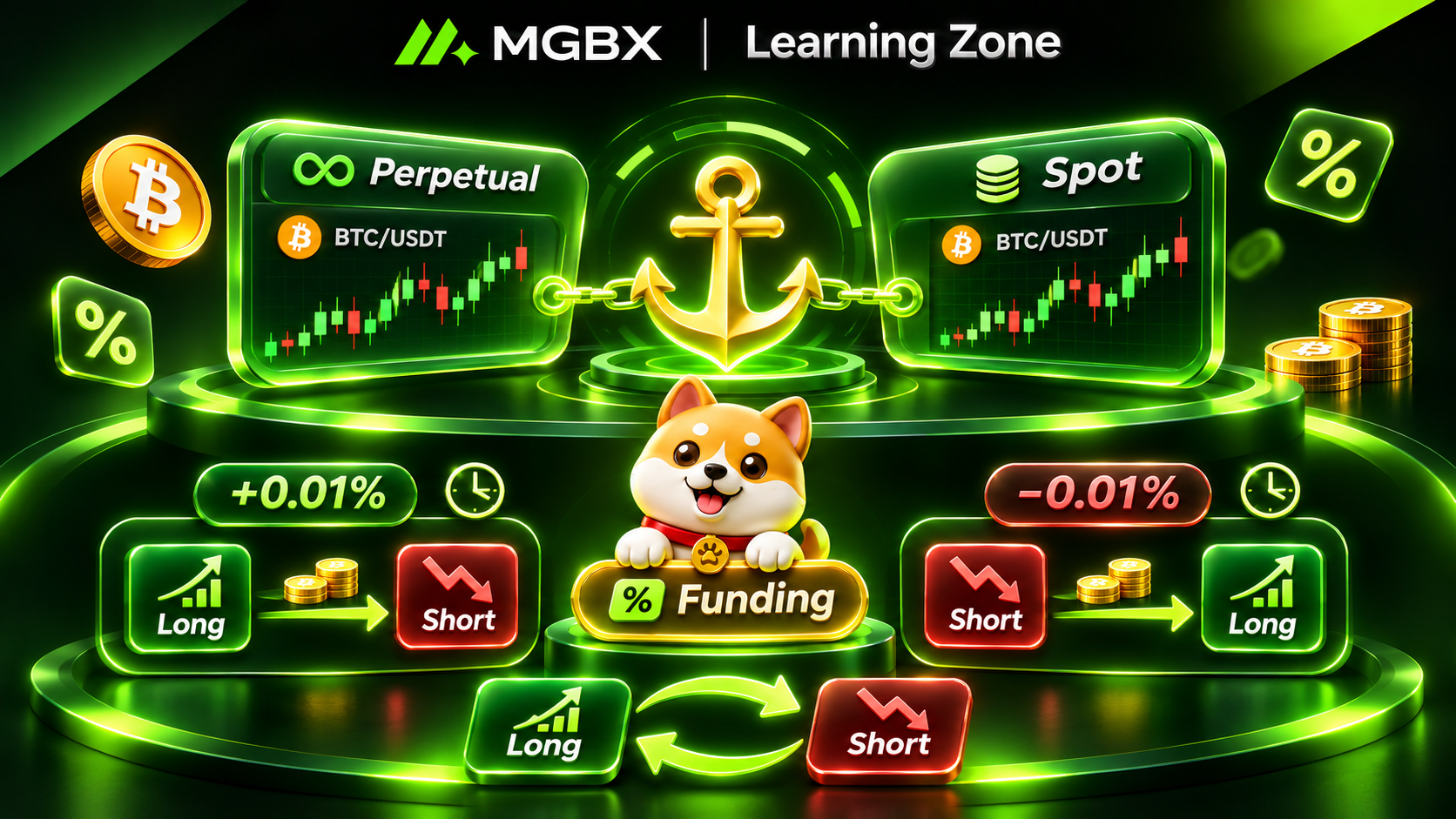
Funding rates are an important mechanism used in perpetual futures to help reduce the gap between contract prices and spot reference prices. When the funding rate is positive, long positions typically pay short positions; when it is negative, short positions generally pay long positions. Funding rates can affect the cost of holding a position and may also reflect market positioning to some extent. However, because funding rates change dynamically, they should not be treated as a fixed-return indicator or used alone to predict market direction.
What Is a Funding Rate?
Traditional delivery futures have a fixed expiry date, and as settlement approaches, their prices generally converge toward the reference spot price. Perpetual futures, however, have no fixed expiry date, so other mechanisms are needed to prevent contract prices from drifting too far from the spot market. The funding rate is one of the most important of these mechanisms.
When a perpetual futures contract trades at a noticeable premium to the spot reference price, the funding rate may turn positive, increasing the holding cost for long positions. When the contract trades at a discount, the funding rate may become negative, increasing the funding cost for short positions.
These economic incentives encourage traders to take positions on both sides of the market, helping reduce the gap between perpetual futures prices and their spot reference prices. However, funding rates do not guarantee that futures prices will always match spot prices exactly. They are simply one of the key mechanisms used to support price alignment.
How Are Long and Short Funding Payments Calculated?
When the funding rate is positive, long positions typically pay funding to short positions. When the funding rate is negative, short positions generally pay funding to long positions.
Under a simplified calculation:
Funding Fee ≈ Position Notional Value × Current Funding Rate
For example, if a position has a notional value of 10,000 USDT and the current funding rate is 0.01%, the funding fee would be approximately 1 USDT. Whether the trader pays or receives that amount depends on the position direction and whether the funding rate is positive or negative.
Leverage itself is generally not directly included in the funding fee formula. However, leverage allows traders to control larger positions with the same amount of margin, while funding fees are based on the position’s notional value. As a result, larger highly leveraged positions may experience a more significant funding cost.
Funding settlement intervals are not necessarily the same for every perpetual futures contract and may be adjusted according to market conditions. When trading futures on MGBX, traders should refer to the funding rate, estimated settlement time, and applicable rules displayed on the relevant trading pair page rather than assuming that every contract settles funding at a fixed eight-hour interval.
What Is Funding Rate Arbitrage?
One common funding rate arbitrage approach involves opening spot and perpetual futures positions in opposite directions with similar notional values. The goal is to reduce overall directional price exposure while potentially earning funding payments from the perpetual position.
For example, during a period of consistently positive funding rates, some traders may hold a long spot position while opening a similarly sized short perpetual futures position. If price movements on both sides offset each other effectively, returns may depend more on funding payments and changes in basis than on directly predicting whether the asset price will rise or fall.
However, this is not risk-free arbitrage. Funding rates change dynamically, and a positive rate may decline or even turn negative. The basis between spot and perpetual futures may also widen. Traders must also consider trading fees, slippage, liquidity, margin requirements, liquidation risk, execution timing, and platform-related risks.
Funding rate arbitrage is therefore more accurately viewed as a market-neutral strategy designed to reduce part of the directional price risk rather than as a fixed-return product that guarantees profits.
FAQ
What does a positive funding rate mean?
It generally means that long positions pay funding to short positions at settlement. The amount depends on the position value and the applicable funding rate.Who pays when the funding rate is negative?
Short positions generally pay funding to long positions.Is the funding rate the same as a trading fee?
No. Trading fees are typically charged when an order is executed, while funding fees are related to holding perpetual futures positions through funding settlement periods. They are separate costs.How often are funding rates settled?
There is no single interval that applies to every contract. Different trading pairs may use different settlement schedules, which can also be adjusted based on market conditions. Always refer to the trading page for the latest information.Can funding rate arbitrage guarantee profits?
No. The strategy still involves risks such as funding rate reversals, basis changes, trading fees, slippage, liquidity constraints, and liquidation.
Mastering the basics is the first step. Follow MGBX Academy to access more cryptocurrency educational resources and market opportunities.
The process for trading on MGBX:
Register a trading account and complete the necessary identity verification;
Deposit funds and select a trade type;
On the cryptocurrency trading page, enter the amount or quantity of the cryptocurrency you wish to purchase;
Confirm the order to complete the trade, and check that your assets have increased accordingly.
Further Readings:
Complete Guide to Futures Trading: From Beginner Basics to Risk Management
What Is Futures Trading: Perpetual Futures vs Delivery Futures
Leveraged Trading Explained: Amplifying Both Returns and Risk