What Is Leverage? A Double-Edged Sword for Returns
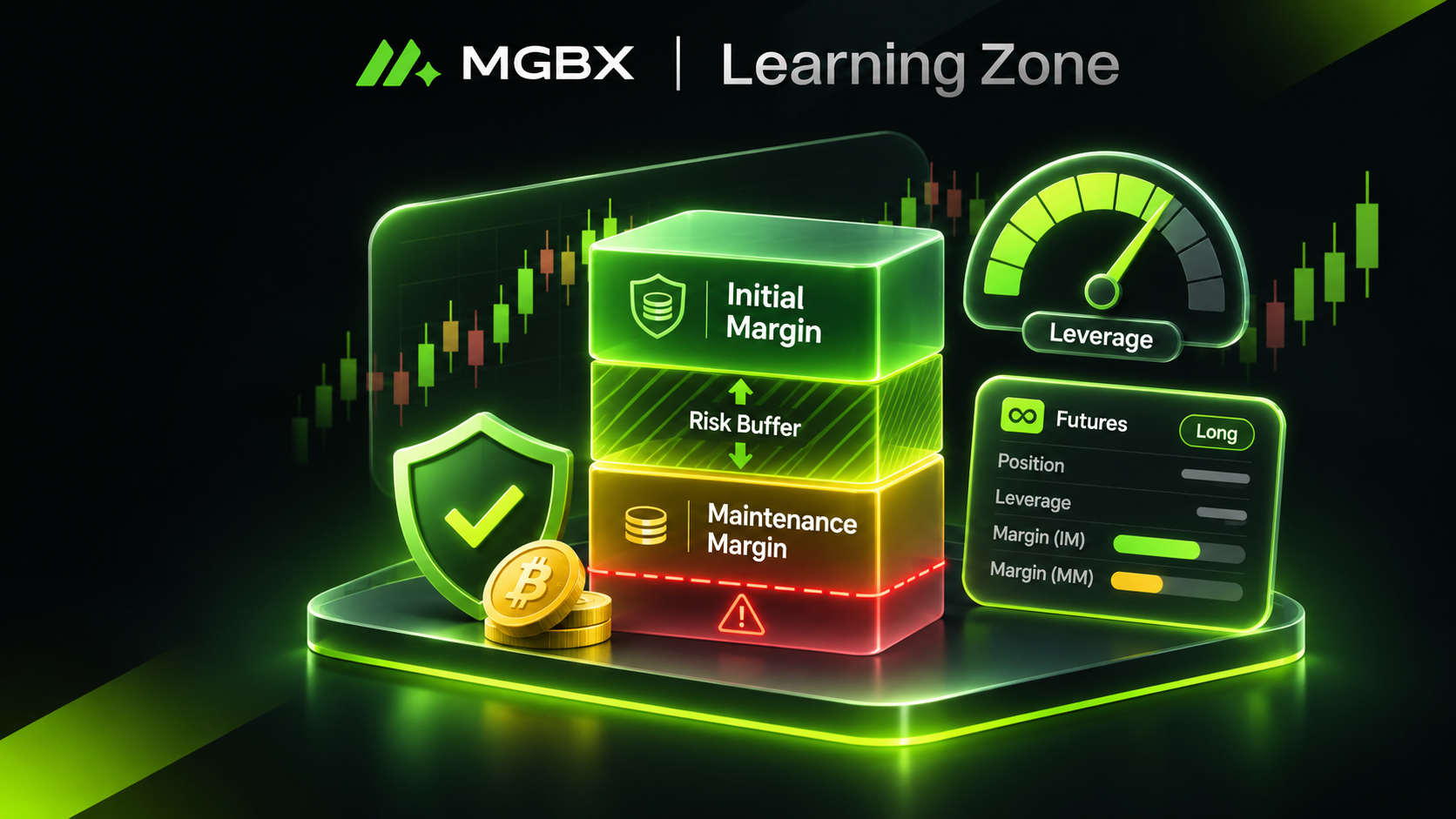
Leverage uses less capital to support a larger position, magnifying gains and losses relative to margin. With margin unchanged, increasing leverage and position size raises potential profits and losses. With position size unchanged, higher leverage mainly reduces initial margin requirements. Understanding leverage risk also means distinguishing overall account exposure from an individual position’s liquidation risk. An isolated position can be liquidated for insufficient margin even when the account has unused funds.
How Does Leverage Work, and How Is It Calculated?
Leverage describes the relationship between market exposure and the capital supporting it. Spot margin trading expands exposure through borrowed assets, while futures use margin to support a larger contract value. Futures leverage does not mean the platform actually lends the trader an equivalent quantity of tokens. CME Group’s guide to leverage explains how less capital can support greater contract exposure.
A simplified calculation at entry:
Leverage = Opening Notional Value ÷ Initial Margin
A position worth 1,000 quote-currency units with 200 units of initial margin has 5x leverage. Once the position is open, equity changes with profit and loss, so the leverage setting may differ from the position’s current effective leverage.
How Does Leverage Magnify Both Gains and Losses?
This educational example uses linear futures with equal initial margin and a 2% price move, excluding fees and slippage.
Initial Margin | Leverage | Opening Position Value | Long Profit on a 2% Rise | Long Loss on a 2% Fall |
100 | 2x | 200 | 4 | 4 |
100 | 5x | 500 | 10 | 10 |
100 | 10x | 1,000 | 20 | 20 |
All amounts use the same quote currency. With margin unchanged, a larger position increases both gains and losses. However, if the contract quantity stays the same, raising the leverage setting alone does not change the profit or loss from the same price movement.
For example, a position initially worth 1,000 units gains approximately 20 units on a 2% rise. Whether initial leverage is 5x or 10x, the main difference is the basic margin requirement: approximately 200 or 100 units. A higher percentage return may simply reflect a smaller margin denominator.
Why Can a Position Be Liquidated Despite Low Account Exposure?
Suppose an account holds 1,000 units. The trader allocates just 50 units to an isolated position worth 1,000 units at 20x leverage. At entry, position value equals total account equity, giving approximately 1x account-level exposure. Yet the isolated position still relies primarily on its allocated 50 units to absorb losses.
Without additional margin or an applicable automatic top-up feature, the remaining balance does not automatically support that position. Low account-level exposure therefore does not mean an individual position is far from liquidation.
The reciprocal of leverage is not an exact liquidation threshold either. Actual conditions depend on maintenance margin, fees, margin mode, and the reference price, as detailed in the relevant futures liquidation rules. Leverage risk also depends on the price path: a position may be liquidated before the market moves in the anticipated direction.
FAQ
Does higher leverage always mean greater profits?
Only when position size also increases, with other conditions unchanged.Is 1x account-level exposure equivalent to ordinary spot trading?
No. Leveraged products can still involve liquidation, funding payments, and isolated margin requirements.Does 10x leverage always trigger liquidation after a 10% adverse move?
No. Maintenance margin, fees, and other factors affect the actual trigger.Can leverage improve your win rate?
No. It changes exposure relative to capital, not the accuracy of your market predictions.
Mastering the basics is the first step. Follow MGBX Academy to access more cryptocurrency educational resources and market opportunities.
The process for trading on MGBX:
Register a trading account and complete the necessary identity verification;
Deposit funds and select a trade type;
On the cryptocurrency trading page, enter the amount or quantity of the cryptocurrency you wish to purchase;
Confirm the order to complete the trade, and check that your assets have increased accordingly.
Further Readings:
The Complete Beginner’s Guide to Leverage Trading
Margin Explained: Initial Margin and Maintenance Margin
How to Choose Leverage: A Beginner’s Guide
Margin Ratios and Risk Ratios: Monitoring Your Positions in Real Time