SOL Staking Guide: How to Earn Rewards
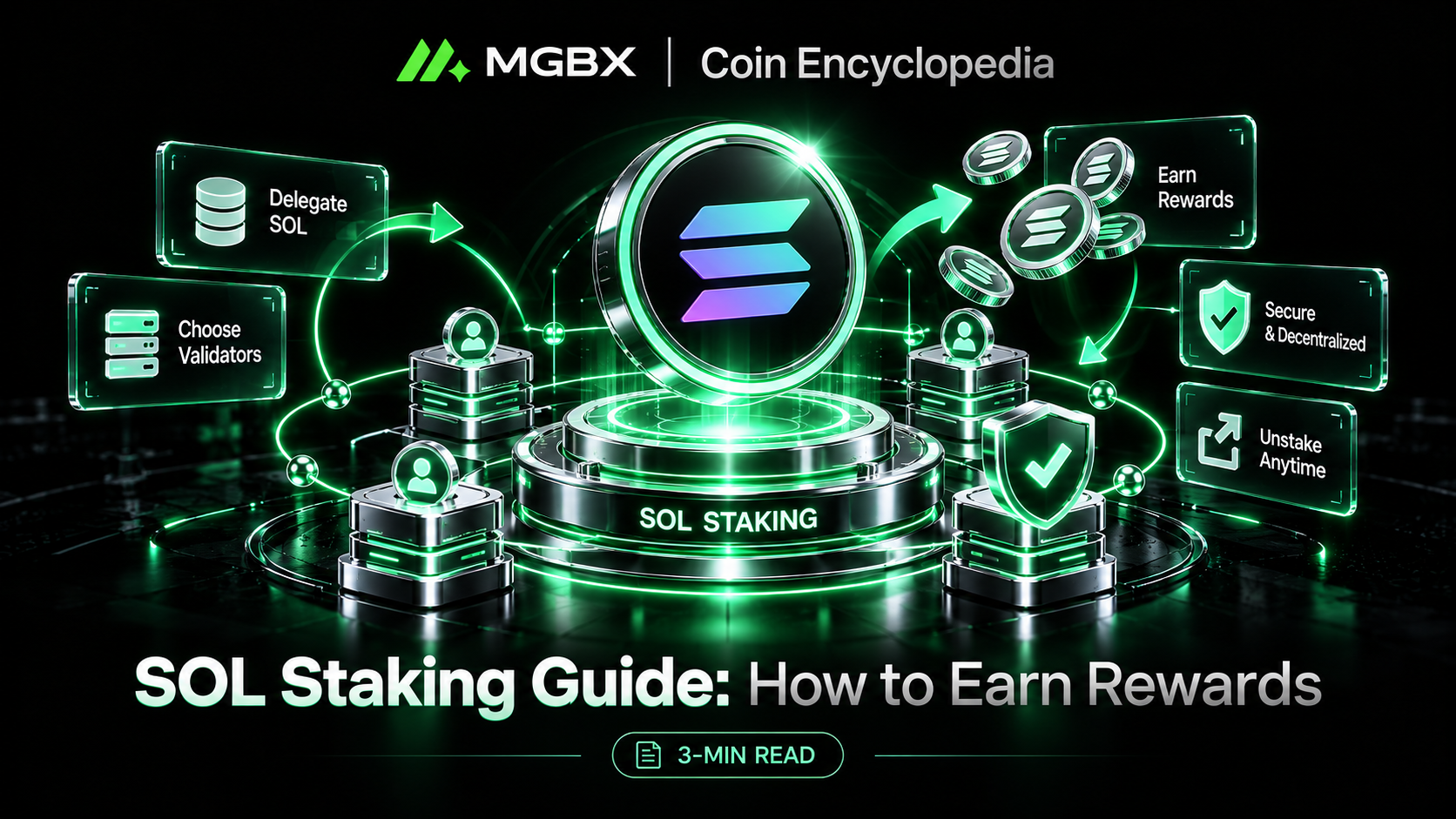
SOL staking involves delegating SOL to Solana validators to support network consensus and earn rewards according to protocol rules. Actual staking rewards depend on factors such as network inflation, total SOL staked, validator performance, and commission rates. Rewards are neither fixed nor guaranteed. Before getting started with Solana Staking, it is important to understand the differences between native staking and liquid staking, how to choose a validator, how stake activation and deactivation work, and how SOL price fluctuations can affect your overall holdings.
What Is SOL Staking and How Does It Work?
Solana Staking is an important part of Solana's Proof of Stake (PoS) mechanism. SOL holders can delegate their tokens to validators to help maintain network consensus and earn staking rewards according to protocol rules. Regular holders can participate in native staking without having to run their own validator nodes.
Native staking differs from bank deposits and fixed-income products. Staking rewards vary depending on factors such as network inflation, total SOL staked, validator performance, and commission rates. Even if you earn additional SOL through staking, the fiat value of your holdings is not guaranteed to increase, as SOL's market price can fall.
It is also important to understand the difference between native staking and liquid staking. Native staking involves delegating SOL through a stake account, while liquid staking protocols typically issue tokens representing your staked position. These tokens may provide additional liquidity, but they also introduce risks related to smart contracts, liquidity, and potential price deviations.
How to Stake SOL and Choose a Validator
When using a wallet that supports native staking, you can follow the steps below. The interface and exact process may vary between wallets, so always refer to the wallet provider's current official instructions.
Prepare your wallet and SOL. Make sure your wallet supports native Solana staking and keep some SOL available to cover on-chain transaction fees.
Open the staking feature. Look for an option labeled Stake or Staking in your wallet. Confirm that you are selecting native staking rather than another yield product that may involve additional protocol risks.
Choose a validator. Review the validator's uptime, commission rate, and operational performance. Do not base your decision solely on rankings or estimated reward rates.
Enter the staking amount and confirm. Before submitting, verify the amount, validator details, and transaction fees. Your stake may need to complete the network's activation process before it becomes eligible to earn rewards.
Monitor your staking status. Check your stake account, validator performance, and reward history regularly. Reassess your delegation when necessary based on your financial needs.
Staking Rewards, Unstaking, and Risk Management
Solana staking rewards are generally distributed each epoch, and an epoch typically lasts around two days. However, stake activation and deactivation do not necessarily complete immediately after a transaction is submitted. The actual timing depends on network epochs and changes in staking activity. If you expect to need your funds, allow sufficient time for the unstaking process.
Under Solana's native staking delegation mechanism, a validator does not automatically gain the authority to withdraw your principal simply because you have delegated SOL to it. However, you should still protect your wallet credentials and understand the permissions associated with your stake account. If you use liquid staking or a third-party platform, you should also evaluate the additional risks involved.
Staking rewards are not risk-free returns. Poor validator performance, high commission rates, wallet compromises, protocol vulnerabilities, and declines in SOL's market price can all affect your results. When evaluating Solana Staking, consider the reward mechanism, asset liquidity, and potential losses rather than focusing solely on a high advertised annual percentage yield (APY).
FAQ
Is the SOL staking reward rate fixed?
No. Rewards vary depending on factors such as network inflation, the total amount of SOL staked, validator performance, and commission rates.Can I withdraw my SOL immediately after staking?
Generally, you must first deactivate your stake delegation and wait for the relevant network epoch to complete. The exact timing may vary.Can a validator directly withdraw my natively staked SOL?
Native stake accounts have specific authorization rules, and delegation alone does not give a validator permission to withdraw your principal. However, you should still protect against malicious approvals, compromised wallet credentials, and risks associated with third-party protocols.Is liquid staking always better than native staking?
No. Liquid staking may offer greater flexibility, but it introduces additional smart contract, liquidity, and token price risks.
Mastering the basics is the first step. Follow MGBX Academy to access more cryptocurrency educational resources and market opportunities.
The process for trading on MGBX:
Register a trading account and complete the necessary identity verification;
Deposit funds and select a trade type;
On the cryptocurrency trading page, enter the amount or quantity of the cryptocurrency you wish to purchase;
Confirm the order to complete the trade, and check that your assets have increased accordingly.